A seedling's hardest
weeks are spent in the field

Wind, frost, pests, disease. Biosep® Model-210 is a reusable plant protection separator that covers each seedling individually through these first weeks.

Ø210 mmbase diameter4 holesrotating capMany seasonsreusablePET + PPrecyclable materials

Two seedlings, one field

The one on the left stays exposed. A Biosep® separator closes over the one on the right.

Wind

Without separatorThe tender stem is whipped about, bends and can snap.

With Biosep®The wind strikes the body; the seedling stays upright.

Rain

Without separatorDownpours batter the leaves and roots and splash up soil.

With Biosep®Drops run down the body instead of hitting the seedling.

Hail

Without separatorHailstones tear young leaves.

With Biosep®Hailstones hit the body and bounce off.

Snow

Without separatorSnow piles up on the leaves.

With Biosep®With the cap closed, snow stays on the body and cap; the seedling stays dry.

Frost

Without separatorFrost settles directly on the leaf.

With Biosep®Frost stays on the outer surface. With the cap closed, the seedling is shielded from the outside air.

The level of protection depends on climate and use.

Strong sun and UV

Without separatorYoung leaves are left exposed to direct sun.

With Biosep®The body shields the seedling from UV rays. Opening the cap lets warm air escape.

Snails

Without separatorReaches the young leaves and eats them.

With Biosep®Snails coming from outside are stopped at the base and can't reach the seedling.

Insects

Without separatorClimbs the stem and gnaws the shoot.

With Biosep®The body is a chemical-free physical barrier to crawling insects coming from outside.

Birds

Without separatorPecks the seedling and pulls off leaves.

With Biosep®Lands on the cap but can't reach the seedling.

Chickens

Without separatorScratches around the seedling and pecks it.

With Biosep®The seedling stays under cover.

Disease

Without separatorPathogens from a neighbouring plant reach the leaves.

With Biosep®Each seedling is covered separately, limiting the passage and spread of disease from plant to plant.

Same weeks, different outcome

The exposed seedling struggles and falls behind. The one under Biosep® grows in a sheltered space.

Illustrative; results depend on the plant, climate and care.
The season ends, the separator stays

Once the plant is established, the separator is lifted, cleaned and stacked. It is used again next season and recycled at the end of its life.

PlantingNatural elementsPestsDiseaseGrowthReuse

Illustrative animation. Growth and level of protection depend on the plant, climate and care.
Dimensions from the technical drawing

Two parts: a clear body and a rotating cap that comes fitted on top.

1

Ø210 × 220 mm

Body

Clear PET. Base diameter 210 mm; a truncated cone that narrows markedly from base to top, with 48 vertical ribs. The base has 3 tabs with 3 nail points between them. Nails are not included; you can secure it with your own if you wish.

2

4 holes

Cap

Black PP. Comes fitted to the body and turns without being removed. Height including the cap: 225.5 mm.

What it protects against

The separator is a physical cover between the seedling and the outside world; it protects mechanically, without chemicals. The level of protection varies with climate, soil and use.

Natural elementsWeather and climate

Wind

Protects the tender stem from being whipped about and snapped by the wind.

Rain

Stops downpours from battering the seedling and its roots.

Hail

Hailstones hit the body, not the leaves.

Snow

With the cap closed, snow settles on the body and cap; the seedling stays dry.

Frost and hoarfrost

On cold nights it keeps direct cold and frost off the seedling.

Strong sun and UV

Shields the seedling from UV rays. The body material is UV-resistant too.

PestsOn the ground and in the air

Snails

With the base set in the soil, snails from outside can't reach the seedling.

Insects and caterpillars

Mechanically keeps them from reaching young shoots from outside.

Birds

Cuts off access to the seedling's leaves.

Chickens and poultry

A physical barrier against pecking and scratching.

DiseaseFrom plant to plant

Spread of disease

Because each seedling is covered separately, plants don't touch one another, which limits disease passing from plant to plant and spreading across the field.

The season ends, the separator stays

Biosep® is not a single-use cover. Once the plant is established it is lifted, cleaned, stacked and used again at the next planting. At the end of its life it goes to recycling.

Schematic; the stacking gap is illustrative.
Reusable

It isn't a one-season product. The durable PET body is cleaned at the end of the season and used again and again.

Stacks inside one another

Separators nest into one another, taking up little room in storage, in transport and on the way to the field.

Recyclable materials

The body is PET, the cap PP; both are recyclable plastic types. At the end of its life it goes to recycling; acceptance varies by region.

Turn the cap yourself

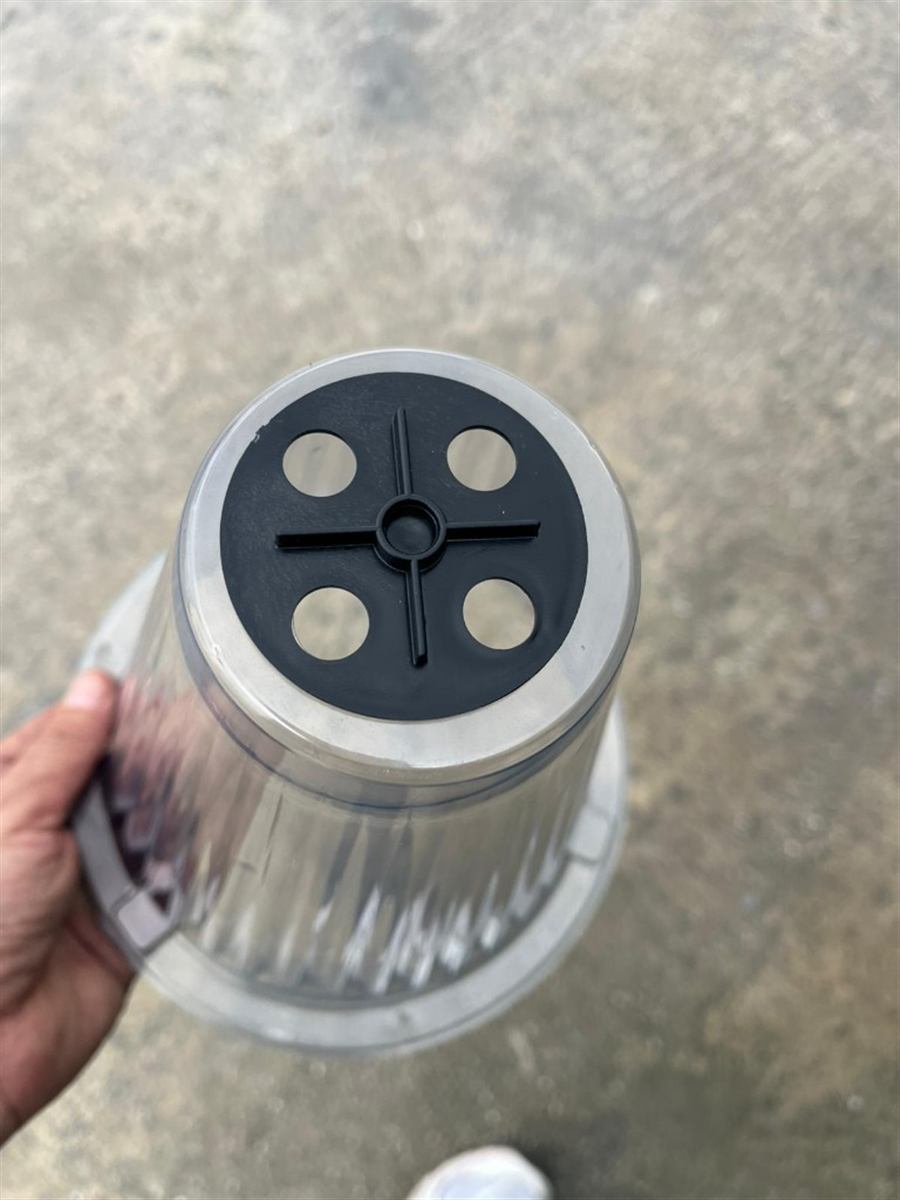
Drag the drawing or use the slider. The holes open, half-open and close. The cap comes fitted to the body.

The black 4-hole cap of a Biosep separator held in the hand, fresh from production
Open

Look at it from every angle

Turn the model with your finger or mouse.

Drag to rotate. Illustrative model; nails are optional and not included.

The product has two parts; the cap ships fitted to the body.

In the field and the greenhouse

The same separator works in the open field and inside the greenhouse. There are two ways to secure it, and the drip line runs underneath in both.

With soil spread around

Plant the seedling, place the separator over it, then spread a thin layer of soil around the base and press it down.

With nails, optional

In windy spots it can also be secured through the 3 nail points in the base with nails of your own. Nails are not included.

In the open field

Place it over the seedling after planting. Soil spread around the base helps keep the separator in place in the wind.

In the greenhouse

It gives each seedling its own sheltered space. With plants covered one by one, contact and disease transfer between them are limited. Open or close the cap holes to suit the greenhouse air.

With drip irrigation

The irrigation line can run uninterrupted beneath the separators, so you put them in place without removing the line.

From our first field trials

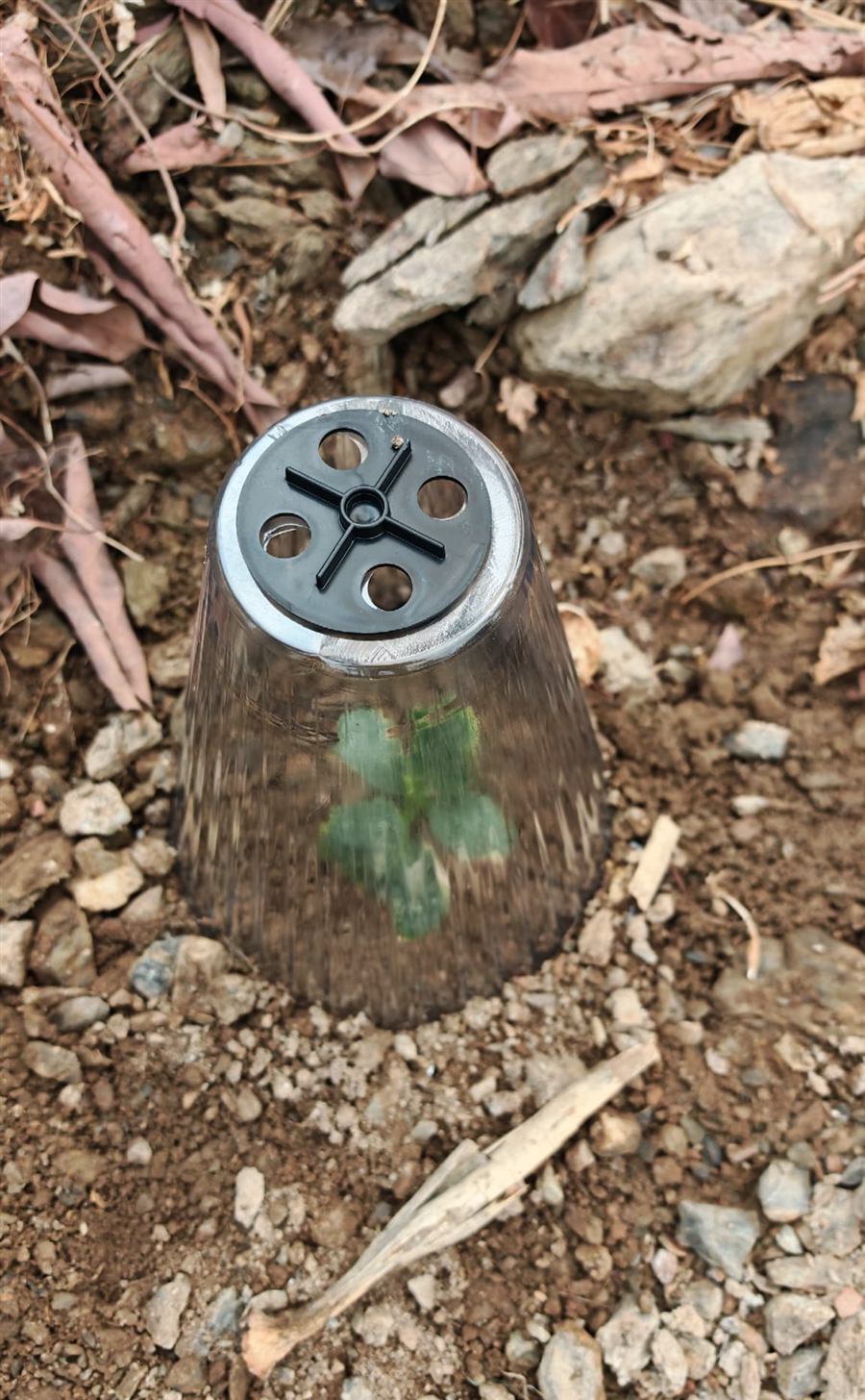
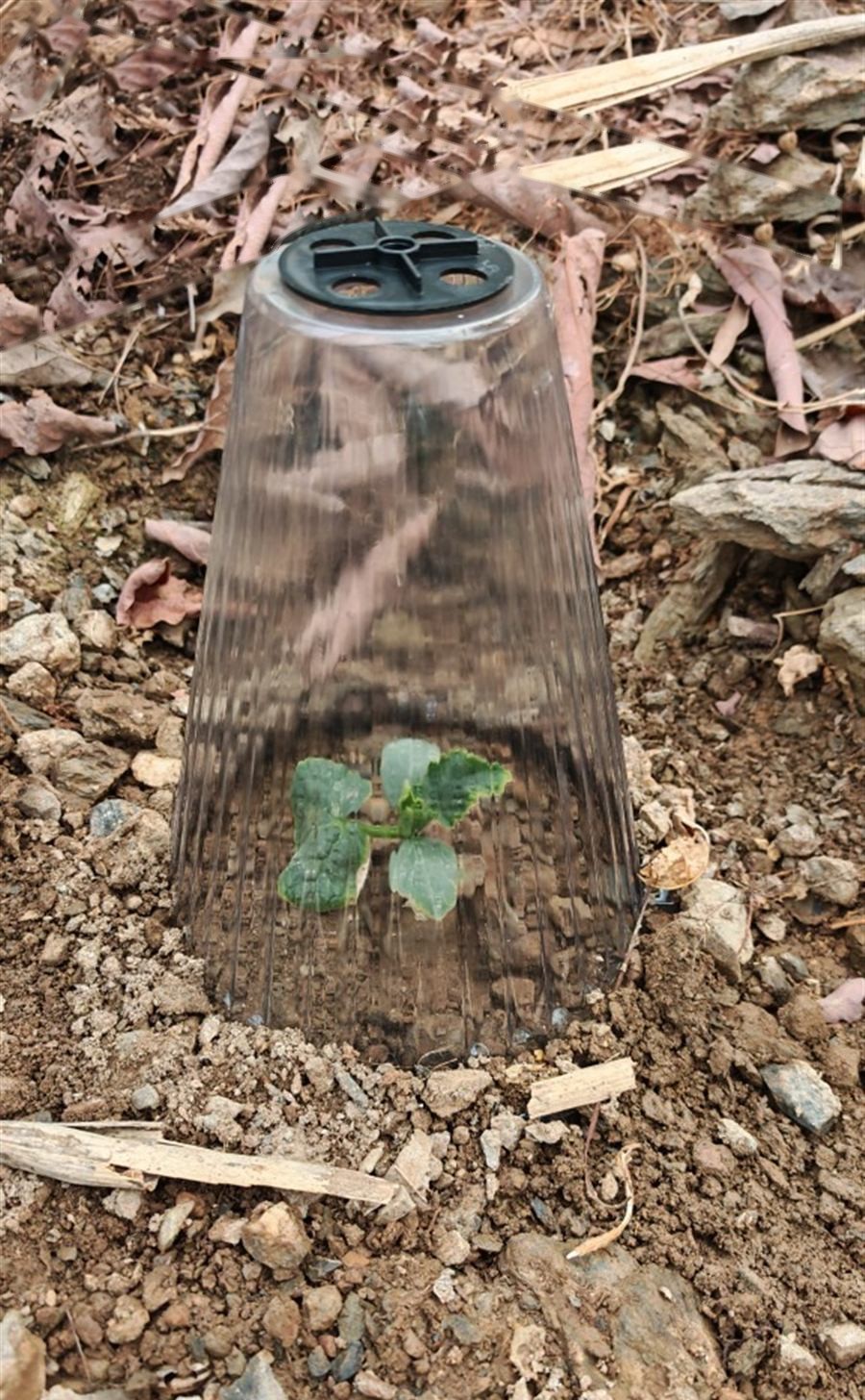
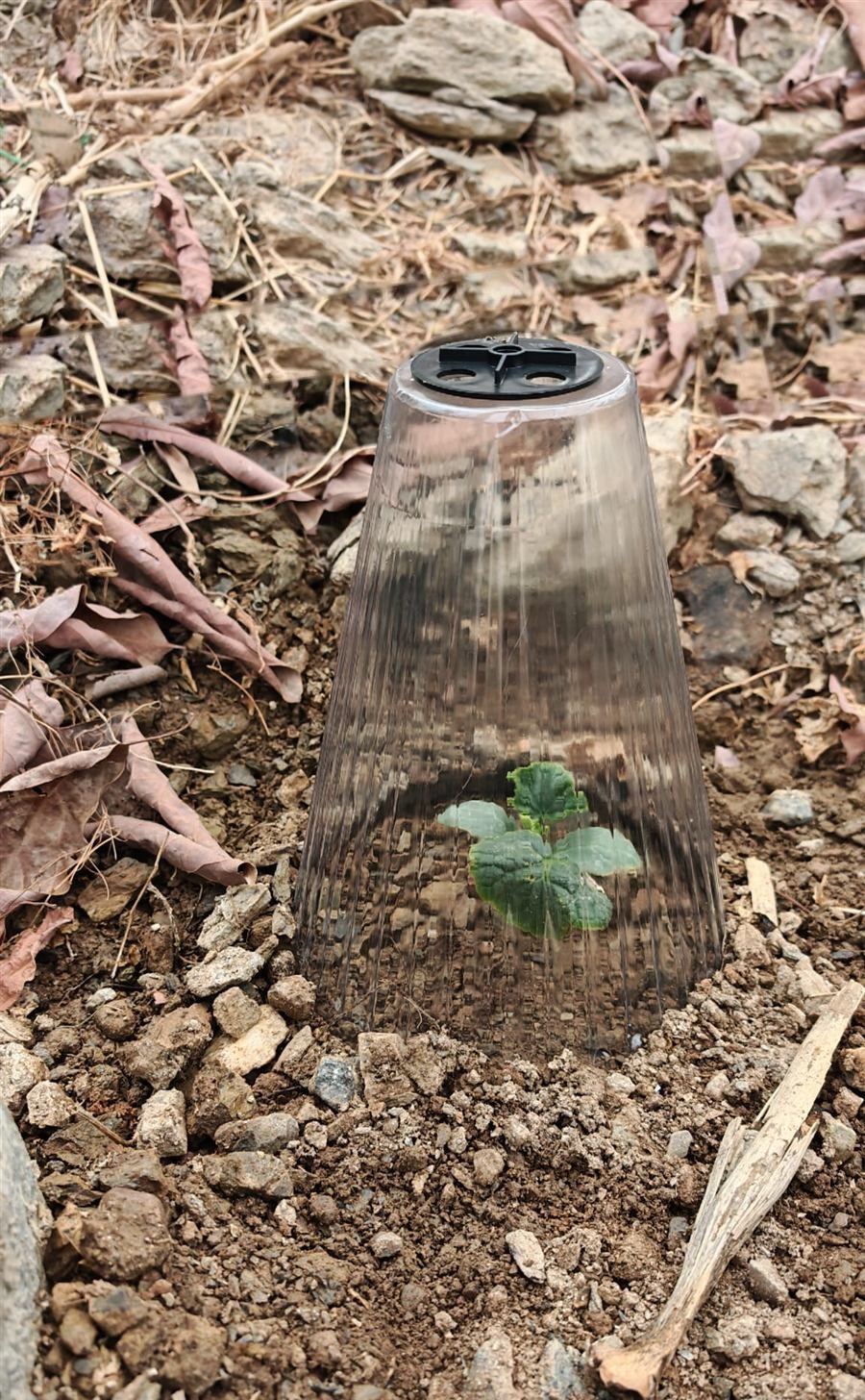
Real field photos: a young seedling under a separator in stony soil, with soil spread around its base.

A young seedling under a separator in a stony field
A separator in the field seen from above: cap holes open, seedling inside
A seedling under a separator in stony soil, with soil spread around the base

Where it's used

From open fields to home gardens: for vegetables, fruit, herbs and flowers going through the sensitive weeks after transplanting.

Open field

In row planting, alongside drip irrigation lines.

Greenhouse

A sheltered space for each seedling.

Home and hobby gardens

Gardens with a few seedlings, birds and poultry.

Nurseries and vineyards

The first weeks after planting young saplings.

  • Vegetable seedlings
  • Fruit and saplings
  • Aromatic herbs
  • Flowers and ornamentals

Frequently asked questions

From setting up to storage, the questions we hear most.

If your question isn't answered here, write to the manufacturer directly.

Ask on WhatsApp
How do I set it up?

Plant the seedling, place the separator over it, then spread a thin layer of soil around the base and press it down. The cap comes fitted, so there are no extra parts to attach.

Does it shift in the wind?

Soil spread around the base helps keep the separator in place. On windy ground you can also secure it through the 3 nail points in the base with your own nails; nails are not included.

Can it be used with drip irrigation?

Yes. The drip line can run uninterrupted under the separator; there's no need to remove it.

When should I open and close the cap?

Keep the holes closed on cool nights and in cold weather, and open on sunny, mild days. There's a half-open position in between. The cap turns without coming off the body.

Take into account the type of plant and whether it is in a greenhouse or the open field.

Does it get too hot inside on sunny days?

Turning the cap to open the holes lets warm air escape. Keep the holes open on sunny, mild days to stop the plant overheating or going short of air.

Can it be used in greenhouses?

Yes. Inside a greenhouse it gives each seedling its own sheltered space and reduces contact between plants. When the greenhouse warms up, turn the cap to open the holes.

When should I remove the separator?

Once the plant is established and starts to fill the separator. The timing varies with plant type and weather.

Which plants is it for?

Vegetable seedlings, fruit and saplings, aromatic herbs, flowers and ornamentals. See Where it's used for details.

Does it keep pests out without chemicals?

The separator is a physical barrier, not a chemical one. It mechanically stops snails, insects, caterpillars, birds and chickens coming from outside from reaching the young seedling. Pests already in the soil before planting can stay inside, and very small flying insects can get in while the cap holes are open. The need for spraying depends on the region and the pest.

Does it affect the spread of disease between plants?

Because each seedling is covered separately, plants don't touch one another. This limits disease passing from plant to plant and spreading across the field.

How much does it protect against frost?

The separator keeps direct cold and frost off the seedling, and with the cap closed the inside is separated from the outside air. The level of protection depends on climate, plant and how it is set up.

How many seasons does it last?

Biosep® isn't disposable; it is made from durable PET to be reused season after season. The body material is UV-resistant. Service life depends on how it is used and stored.

How do I clean and store it?

At the end of the season, rinse with water, dry, nest them together and store in a dry, shaded place. Stacked inside one another, they take up little space.

Is it recyclable?

Its materials are: the body is PET and the cap PP, both recyclable plastic types. At the end of its life, take it to your local recycling point; what is accepted can vary by region.

Where can I get it?

Biosep® is currently supplied directly by the manufacturer. Get in touch by phone or WhatsApp to find the nearest way to get it in your region.

Who do I contact for samples, bulk enquiries and dealerships?

For all of these, contact the manufacturer, Ales Ambalaj, directly. Samples, bulk quantities for fields and greenhouses, dealership and export enquiries are all handled on the same line.